
Winter & Low Light Weddings: A Practical Guide to Better Photos & Film
Winter weddings in the UK can be ridiculously beautiful — candlelight, cosy venues, crisp air, and a proper sense of occasion. The trade-off is simple: daylight is shorter, venues feel darker earlier, and “low light” becomes part of the plan whether anyone wants it to or not.
The good news is that low light doesn’t automatically mean dark, muddy photos or grainy-looking film. With a sensible timeline, a few lighting decisions, and a team that stays calm when the light drops, winter weddings can still look clean, bright and flattering on camera.
This guide is written in a practical, third-person style so it’s easy to skim, easy to plan with, and easy to come back to later.

Quick answer: How to get bright photos and film in winter and low light
- Plan around daylight first: portraits and group photos should happen before it’s properly dark (especially in winter).
- Use windows on purpose: prep, ceremony positioning, and couple portraits should be near the best available natural light.
- Keep lighting warm and consistent: warm white lighting flatters skin tones; mixed cool LEDs can make footage look harsh.
- Control DJ lighting during speeches: ask for warm white during speeches and save coloured lighting for the party.
- Choose a “bright corner” for prep: hair/makeup near the biggest window, clutter moved out of shot.
- Have a weather plan: clear umbrellas + covered outdoor spots + indoor portrait locations.
- Check proof: look at full galleries/films in similar lighting and read real reviews before booking.

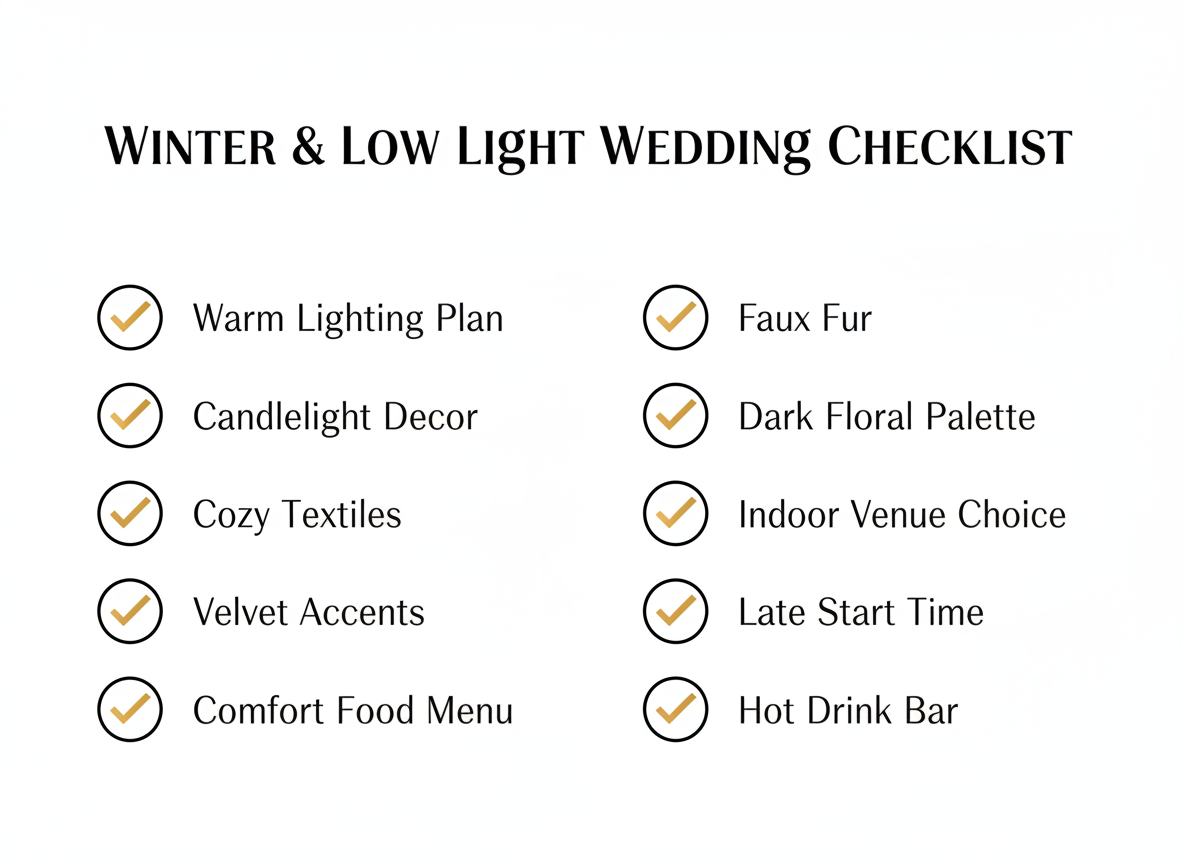
Caption: A quick checklist makes winter planning easier — and keeps the final gallery brighter.
What does “low light” mean for wedding photos and film?
Low light doesn’t just mean “it’s dark outside.” It usually means one (or more) of these situations:
- Short winter days where daylight fades mid-afternoon.
- Small windows or heavy curtains in the ceremony room.
- Indoor-only timelines with limited time outside.
- Candlelight and fairy lights that look amazing to the eye but don’t always light faces evenly.
- Coloured DJ lighting during speeches or first dance (a common culprit).
Photography and videography also respond differently to low light. A still photo can be captured in a split second. Film needs consistent light over time so movement looks clean and natural. That’s why lighting decisions matter so much for video, especially during speeches and the first dance.
For examples of how low light scenes can still look polished, the best reference is the wedding film portfolio.


Why winter weddings feel darker (and why the timeline matters more than people think)
Winter weddings are often low light weddings by default. Daylight is shorter, the sun sits lower, and venues switch to indoor lighting earlier.
If a simple reference helps, this overview of the winter solstice explains why winter days are the shortest of the year in the Northern Hemisphere.
The key planning point is this: if the day is built around a late ceremony time, it becomes much harder to get bright portraits and group photos without it feeling rushed.
Which venues tend to be low-light? (and how to plan around them)
Some venues are naturally bright: big windows, neutral walls, open spaces. Others are darker by design — and couples choose them because they’re beautiful, atmospheric, and full of character.
Two examples that can have lower-light rooms depending on the setup are Gosfield Hall and Leez Priory. Both are stunning venues, but like many historic buildings, some spaces can be darker — especially later in the day or in winter.
The goal isn’t to avoid low light venues. It’s to plan the day so the best light is used at the moments that matter most.
How to position the ceremony for better light (without changing the vibe)
One of the biggest “wins” in a low-light venue is simply where people stand and sit.
In an ideal setup:
- The couple is positioned where the best available light hits faces evenly.
- Guests aren’t backlit by a bright window (which can make faces look darker).
- The ceremony uses daylight while it’s available, then transitions to warm indoor lighting later.
This is the kind of detail that’s easy to miss when planning everything else. The FAQs and how the process works page addresses many of the practical questions couples ask when planning timelines and ceremony setups.

Timeline matters more than gear (yes, really)
Low light is often treated like a camera problem. Most of the time, it’s a planning problem.
A winter wedding with a 3 pm ceremony is automatically harder to keep “bright and clean” than a winter wedding with a 1 pm ceremony — even in the exact same venue.
Simple timeline moves that help:
- Bring the ceremony earlier (even by 60–90 minutes).
- Do a couple of portraits before it’s fully dark (10–20 minutes is usually enough).
- Keep group photos efficient and done while there’s still daylight.
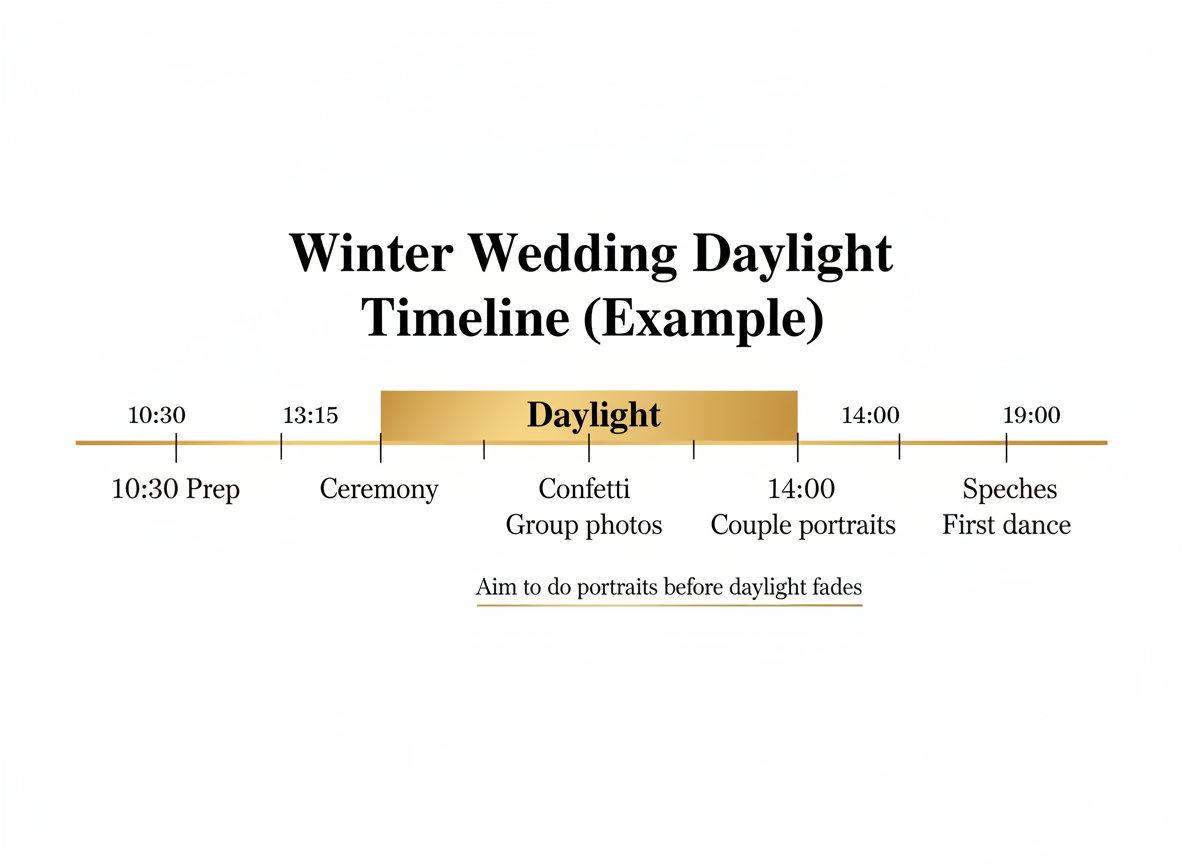
Caption: In winter, moving one key moment earlier can make the whole gallery feel brighter.
Low light wedding photography vs videography: what’s different?
It helps explain why film is more sensitive to low light than photos.
- Photography can freeze a moment instantly, even in darker conditions.
- Videography captures movement continuously, so it benefits from steadier, more consistent light.
This is why lighting decisions (especially during speeches and first dance) matter so much for film. For couples who want both photo and film, it’s usually easier when one team is thinking about light from both angles all day.
Scott Miller Photography covers weddings UK-wide, with a focus on Essex, Kent, London and the Southeast. For local planning, these pages can help:
- Essex wedding photographer and videographer
- wedding photography in London
- wedding photography in Hertfordshire

Low light venue approaches: what’s the best fit?
There isn’t one “right” way to handle a darker venue. The best approach depends on what the couple wants the day to feel like.
| Approach | Best for | Watch-outs | How to make it look great |
|---|---|---|---|
| Window-led daylight plan | Couples who want bright, clean, natural-looking photos | Needs an earlier ceremony / portrait slot | Use the biggest windows for prep + ceremony positioning; do portraits before dusk |
| Candlelit / cosy plan | Couples who want warm, intimate, cinematic vibes | Faces can go dark if candles are the only light source | Use candles in clusters + add subtle warm uplighting; avoid mixed cool LEDs |
| Mixed lighting plan | Couples who want atmosphere plus clarity | Colour casts (blue/purple/green) can ruin skin tones | Keep speeches in warm white; save coloured DJ lights for later |
Mid-article FAQ video: Low light (winter/venues)
If it’s helpful to hear it explained rather than read it, this FAQ video covers how low light is handled in winter weddings and darker venues.
Lighting that looks good on camera (and lighting that doesn’t)
Low light doesn’t mean harsh light is needed. The best winter weddings usually have warm, flattering light that’s consistent.
Lighting that usually looks great:
- Candles (where allowed) used in clusters rather than one or two dotted around.
- Warm fairy lights as background texture.
- Warm festoon lighting.
- Subtle warm uplighting that lifts the room without changing skin tones.
Lighting that often causes problems:
- Strong purple/blue uplighting during speeches (it can tint faces).
- DJ disco lights during speeches (save it for the party).
- Mixed lighting temperatures (cool LEDs + warm candles) without a plan.
If a neutral reference helps, this page on colour temperature explains why warm vs cool lighting changes how skin tones look.
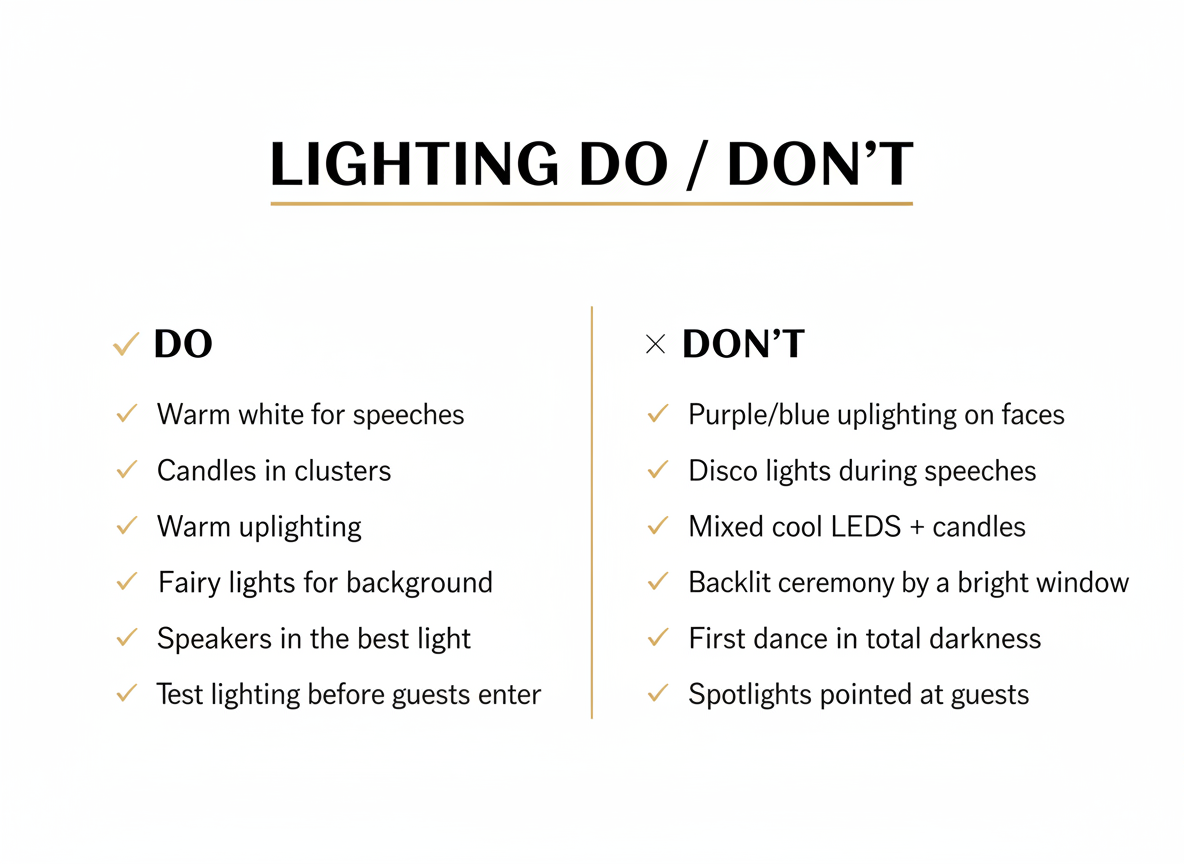
Caption: Warm, consistent light keeps skin tones natural — especially during speeches and first dance.

What to ask the DJ or band (especially for speeches)
Speeches are a big deal in both photos and film: faces, reactions, laughter, tears — it’s all happening fast. If heavy coloured lighting is used, skin tones can turn green, purple, or blue.
Simple questions to ask:
- Can coloured lights be kept off during speeches?
- Can warm white lighting be used for speeches and coloured lighting saved for later?
- Where will speakers stand, and can lighting be aimed there?
How to plan portraits in winter and low light (without disappearing for ages)
Low light portraits can look incredible — but the best ones are planned, not improvised.
What helps most:
- Do portraits earlier (before it’s fully dark).
- Use sheltered spots near the venue (doorways, porches, archways).
- Keep it short (10–20 minutes is usually enough).
- Stay warm (cold shows on camera more than people realise).
Proof matters: reviews and real work
When couples are deciding who to book for a winter wedding, proof matters. It’s worth reviewing real-world work under similar lighting conditions and reading what past couples say about the experience.
These two pages are the best place to start:

FAQs about winter and low-light weddings
Can wedding photos still look bright in winter?
Yes. Bright winter photos come from using daylight intentionally, keeping the timeline realistic, and choosing warm, flattering indoor lighting when daylight fades.
Are candlelit ceremonies bad for photos and film?
No — they can look amazing. The key is making sure faces are still lit evenly and not relying on a few candles as the only light source.
Do photographers and videographers use extra lighting?
Sometimes, yes — especially later in the day. The goal is to keep it subtle and flattering, not to turn the room into a studio.
What should be avoided in low-light venues?
Strong coloured lighting on faces during speeches is a big one. Mixed cool and warm lighting can also make footage look inconsistent.
Where can couples find more practical planning answers?
The FAQs page covers the most common questions around coverage, planning, and what to expect.

Check availability
If you’re planning a winter wedding or getting married in a low-light venue (including venues like Gosfield Hall and Leez Priory), and you want relaxed, high-end wedding photography and videography that still looks clean and flattering, get in touch and share what you’re planning.
Contact Scott Miller Photography here to
Winter & Low Light Weddings: A Practical Guide to Better Photos & Film
Winter weddings in the UK can be ridiculously beautiful — candlelight, cosy venues, crisp air, and a proper sense of occasion. The trade-off is simple: daylight is shorter, venues feel darker earlier, and “low light” becomes part of the plan whether anyone wants it to or not.
The good news is that low light doesn’t automatically mean dark, muddy photos or grainy-looking film. With a sensible timeline, a few lighting decisions, and a team that stays calm when the light drops, winter weddings can still look clean, bright and flattering on camera.
This guide is written in a practical, third-person style so it’s easy to skim, easy to plan with, and easy to come back to later.
Quick answer: How to get bright photos and film in winter and low light
- Plan around daylight first: portraits and group photos should happen before it’s properly dark (especially in winter).
- Use windows on purpose: prep, ceremony positioning, and couple portraits should be near the best available natural light.
- Keep lighting warm and consistent: warm white lighting flatters skin tones; mixed cool LEDs can make footage look harsh.
- Control DJ lighting during speeches: ask for warm white during speeches and save coloured lighting for the party.
- Choose a “bright corner” for prep: hair/makeup near the biggest window, clutter moved out of shot.
- Have a weather plan: clear umbrellas + covered outdoor spots + indoor portrait locations.
- Check proof: look at full galleries/films in similar lighting and read real reviews before booking.

What does “low light” mean for wedding photos and film?
Low light doesn’t just mean “it’s dark outside.” It usually means one (or more) of these situations:
- Short winter days where daylight fades mid-afternoon.
- Small windows or heavy curtains in the ceremony room.
- Indoor-only timelines with limited time outside.
- Candlelight and fairy lights that look amazing to the eye but don’t always light faces evenly.
- Coloured DJ lighting during speeches or first dance (a common culprit).
Photography and videography also respond differently to low light. A still photo can be captured in a split second. Film needs consistent light over time so movement looks clean and natural. That’s why lighting decisions matter so much for video, especially during speeches and the first dance.
For examples of how low-light scenes can still look polished, the best reference is the wedding film portfolio.
Why winter weddings feel darker (and why the timeline matters more than people think)
Winter weddings are often low-light weddings by default. Daylight is shorter, the sun sits lower, and venues switch to indoor lighting earlier.
If a simple reference helps, this overview of the winter solstice explains why winter days are the shortest of the year in the Northern Hemisphere.
The key planning point is this: if the day is built around a late ceremony time, it becomes much harder to get bright portraits and group photos without it feeling rushed.
Which venues tend to be low light? (and how to plan around them)
Some venues are naturally bright: big windows, neutral walls, open spaces. Others are darker by design — and couples choose them because they’re beautiful, atmospheric, and full of character.
Two examples of rooms with low lighting, depending on the setup, are Gosfield Hall and Leez Priory. Both are stunning venues, but like many historic buildings, some spaces can be darker — especially later in the day or in winter.
The goal isn’t to avoid low-light venues. It’s to plan the day so the best light is used at the moments that matter most.
How to position the ceremony for better light (without changing the vibe)
One of the biggest “wins” in a low-light venue is simply where people stand and sit.
In an ideal setup:
- The couple is positioned where the best available light hits faces evenly.
- Guests aren’t backlit by a bright window (which can make faces look darker).
- The ceremony uses daylight while it’s available, then transitions to warm indoor lighting later.
This is the kind of detail that’s easy to miss when planning everything else. The FAQs and how the process works page covers a lot of the practical questions couples ask when planning timelines and ceremony setups.
Timeline matters more than gear (yes, really)
Low light is often treated like a camera problem. Most of the time, it’s a planning problem.
A winter wedding with a 3pm ceremony is automatically harder to keep “bright and clean” than a winter wedding with a 12:30pm ceremony — even in the exact same venue.
Simple timeline moves that help:
- Bring the ceremony earlier (even by 60–90 minutes).
- Do couple portraits before it’s fully dark (10–20 minutes is usually enough).
- Keep group photos efficient and done while there’s still daylight.
Low light wedding photography vs videography: what’s different?
It helps to understand why film can be more sensitive to low light than photos.
- Photography can freeze a moment instantly, even in darker conditions.
- Videography captures movement continuously, so it benefits from steadier, more consistent light.
This is why lighting decisions (especially during speeches and first dance) matter so much for film. For couples who want both photo and film, it’s usually easier when one team is thinking about light from both angles all day.
Scott Miller Photography covers weddings UK-wide, with a focus on Essex, Kent, London and the Southeast. For local planning, these pages can help:
- Essex wedding photographer and videographer
- wedding photography in London
- wedding photography in Hertfordshire
Low light venue approaches: what’s the best fit?
There isn’t one “right” way to handle a darker venue. The best approach depends on what the couple wants the day to feel like.
| Approach | Best for | Watch-outs | How to make it look great |
|---|---|---|---|
| Window-led daylight plan | Couples who want bright, clean, natural-looking photos | Needs an earlier ceremony / portrait slot | Use the biggest windows for prep + ceremony positioning; do portraits before dusk |
| Candlelit / cosy plan | Couples who want warm, intimate, cinematic vibes | Faces can go dark if candles are the only light source | Use candles in clusters + add subtle warm uplighting; avoid mixed cool LEDs |
| Mixed lighting plan | Couples who want atmosphere plus clarity | Colour casts (blue/purple/green) can ruin skin tones | Keep speeches in warm white; save coloured lighting for later |
Mid-article FAQ video: Low light (winter/venues)
If it’s helpful to hear it explained rather than read it, this FAQ video covers how low light is handled in winter weddings and darker venues.
Lighting that looks good on camera (and lighting that doesn’t)
Low light doesn’t mean harsh light is needed. The best winter weddings usually have warm, flattering light that’s consistent.
Lighting that usually looks great:
- Candles (where allowed) used in clusters rather than one or two dotted around.
- Warm fairy lights as background texture.
- Warm festoon lighting.
- Subtle warm uplighting that lifts the room without changing skin tones.
Lighting that often causes problems:
- Strong purple/blue uplighting during speeches (it can tint faces).
- DJ disco lights during speeches (save it for the party).
- Mixed lighting temperatures (cool LEDs + warm candles) without a plan.
If a neutral reference helps, this page on colour temperature explains why warm vs cool lighting changes how skin tones look.
What to ask the DJ or band (especially for speeches)
Speeches are a big deal in both photos and film: faces, reactions, laughter, tears — it’s all happening fast. If heavy coloured lighting is used, skin tones can turn green, purple, or blue.
Simple questions to ask:
- Can coloured lights be kept off during speeches?
- Can warm white lighting be used for speeches and coloured lighting saved for later?
- Where will speakers stand, and can lighting be aimed there?
How to plan portraits in winter and low light (without disappearing for ages)
Low light portraits can look incredible — but the best ones are planned, not improvised.
What helps most:
- Do portraits earlier (before it’s fully dark).
- Use sheltered spots near the venue (doorways, porches, archways).
- Keep it short (10–20 minutes is usually enough).
- Stay warm (cold shows on camera more than people realise).
For couples who want more planning tips like this, the blog index is the easiest place to browse.

Proof matters: reviews and real work
When couples are deciding who to book for a winter wedding, proof matters. It’s worth looking at real work in similar lighting conditions and reading what past couples say about the experience.
These two pages are the best place to start:
FAQs about winter and low light weddings
Can wedding photos still look bright in winter?
Yes. Bright winter photos come from using daylight intentionally, keeping the timeline realistic, and choosing warm, flattering indoor lighting when daylight fades.
Are candlelit ceremonies bad for photos and film?
No — they can look amazing. The key is making sure faces are still lit evenly and not relying on a few candles as the only light source.
Do photographers and videographers use extra lighting?
Sometimes, yes — especially later in the day. The goal is to keep it subtle and flattering, not to turn the room into a studio.
What should be avoided in low light venues?
Strong coloured lighting on faces during speeches is a big one. Mixed cool and warm lighting can also make footage look inconsistent.
Where can couples find more practical planning answers?
The FAQs page covers the most common questions around coverage, planning, and what to expect.
Check availability
If you’re planning a winter wedding or getting married in a low light venue (including venues like Gosfield Hall and Leez Priory), and you want relaxed, high-end wedding photography and videography that still looks clean and flattering, get in touch and share what you’re planning.
Contact Scott Miller Photography here to check availability.
Follow our latest work
For recent weddings, planning tips, and highlights, you can follow along here:
Tags: candlelit wedding, DJ lighting for weddings, Essex wedding photographer, low light wedding photography, low light wedding videography, speeches lighting, wedding lighting tips, wedding timeline tips, Winter wedding photography, winter wedding videography